
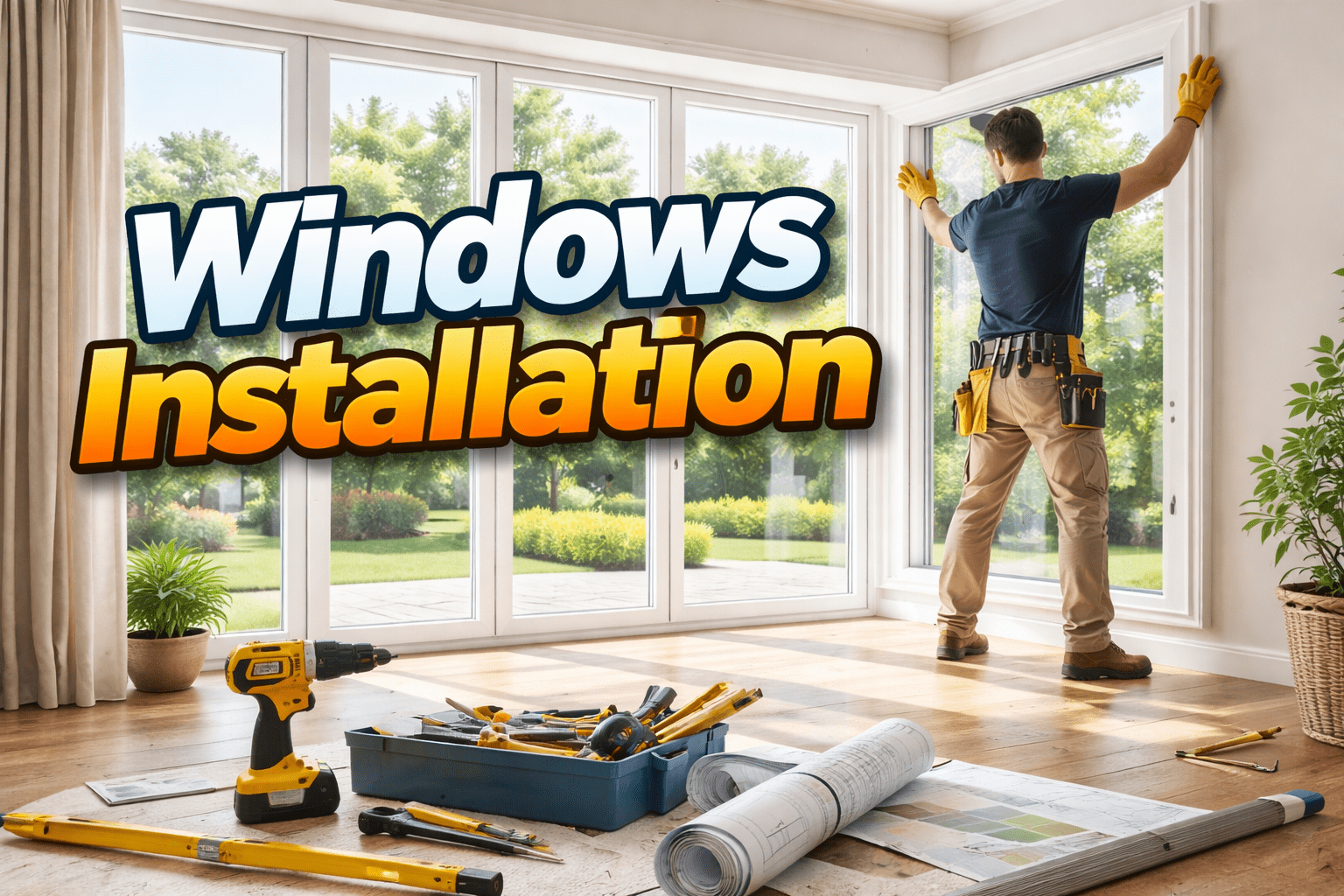
Installing new windows is one of the most effective upgrades you can make to improve comfort, reduce outside noise, and enhance the overall look of your home. Whether you’re replacing old windows or installing new ones in a renovation, choosing the right type and ensuring proper installation can make a big difference in performance and long-term durability.
Why Proper Windows Installation Matters
A high-quality window is only as good as its installation. Even premium windows can cause problems if they’re not fitted, sealed, and aligned correctly. A proper installation helps reduce drafts, prevent water leaks, and maintain consistent indoor temperatures.
- Improved Insulation – Helps keep indoor temperatures stable
- Lower Energy Costs – Reduces heating and cooling loss
- Reduced Noise – Blocks outdoor sounds more effectively
- Moisture Protection – Prevents water intrusion and frame damage
- Smoother Operation – Windows open and close properly without sticking
💡 Tip: If you feel air coming through the edges or notice condensation between panes, your current windows may not be sealing correctly.
Popular Window Types for Residential Homes
The right window type depends on your home’s design, ventilation needs, and how you want the space to feel. Here are some common options homeowners choose:
- Double-Hung Windows – Classic style with flexible airflow control
- Sliding Windows – Smooth horizontal opening, ideal for wide spaces
- Casement Windows – Opens outward, tight seal, great efficiency
- Picture Windows – Fixed glass, maximum light, minimal maintenance
- Bay & Bow Windows – Adds depth, light, and a premium feel
Pro tip: If energy savings matter, look for double-pane or triple-pane glass options with strong sealing performance.
What Happens During the Installation Process?
While every home is different, most window installation projects follow a similar process. A proper workflow ensures the window is installed securely and performs well for years.
- Accurate measurement of the opening
- Removal of the existing window (if replacing)
- Inspection for hidden water damage or frame issues
- Installing and leveling the new window unit
- Sealing gaps to reduce air and moisture leaks
- Final trim work and cleanup
✅ A good installation should feel solid, look clean, and have no noticeable airflow around the edges.
Common Mistakes to Avoid
Many window problems come from avoidable mistakes during selection or installation. Here are a few issues to watch out for:
- Incorrect measurements that create gaps or misalignment
- Weak sealing that leads to drafts and moisture entry
- Ignoring frame material (vinyl, wood, aluminum) and local weather needs
- Choosing style over function without considering ventilation and ease of use
- Skipping warranty details for both product and installation work
Explore Windows Installation Information
Window installation results can vary depending on window type, frame materials, sealing methods, and home structure. Reviewing educational resources may help clarify how different window options work and what factors can influence long-term performance.
Final Thoughts
A well-planned windows installation can improve comfort, reduce noise, and enhance your home’s overall appearance. The key is selecting the right window type for your space and ensuring the installation is done properly for long-term performance.
Whether you’re upgrading one room or replacing every window in your home, taking time to compare options and understand the process can help you make a confident decision. Start exploring window installation choices and upgrade your living space with clarity.