
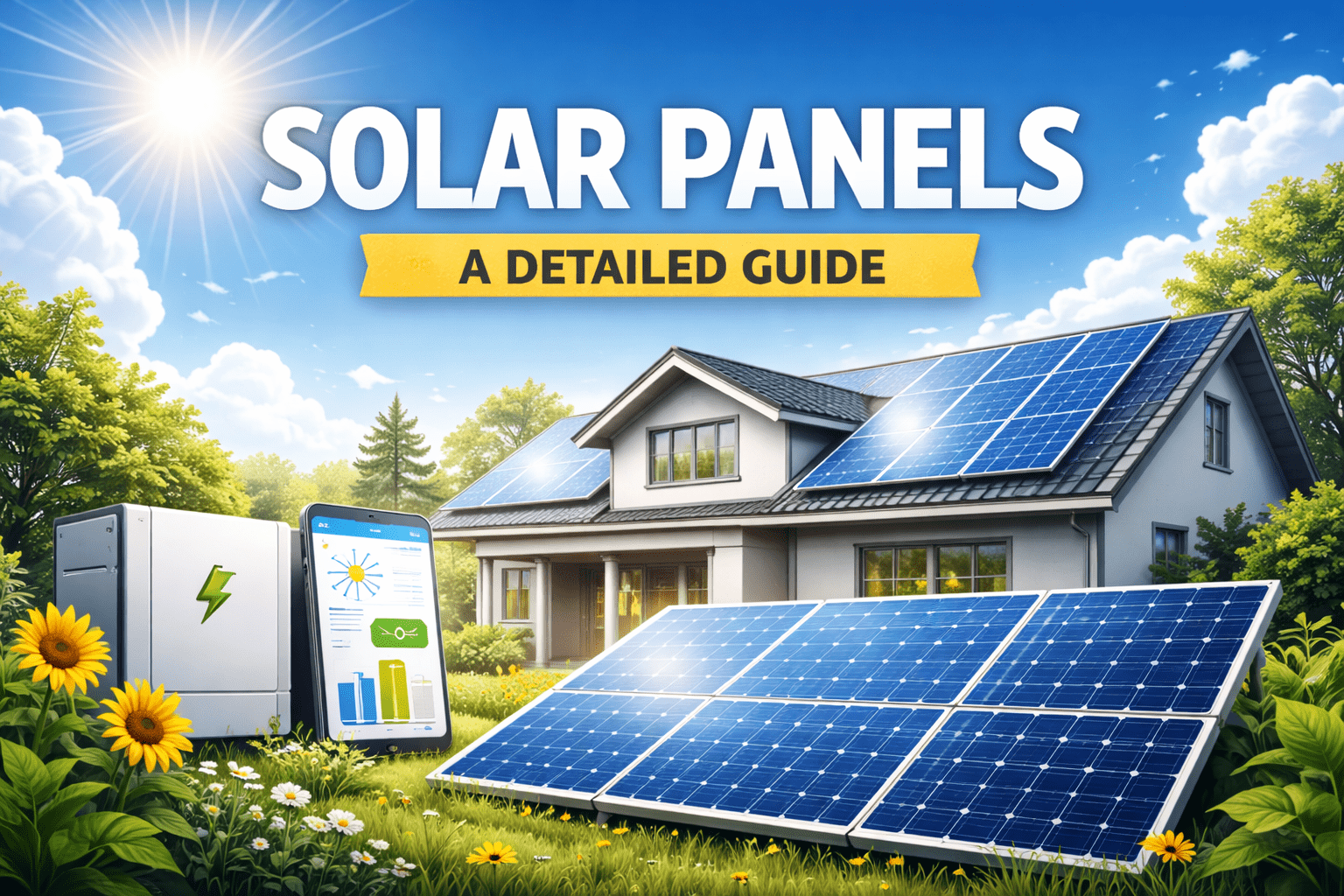
Solar panels have become an increasingly discussed energy option for homes and businesses worldwide. As interest in renewable energy grows, many people want to understand how solar panels function, what types are available, and what factors influence installation and usage decisions.
This guide explains solar panels in detail, covering their basic operation, system components, installation considerations, and long-term planning factors — without focusing on promotional claims or guarantees.
What Are Solar Panels?
Solar panels are devices designed to convert sunlight into usable electrical energy. They are typically installed on rooftops, ground mounts, or other open areas that receive sufficient sunlight throughout the day.
Panels work as part of a broader solar energy system that may include inverters, wiring, monitoring tools, and sometimes energy storage components.
How Solar Panels Work
Solar panels use photovoltaic (PV) cells to capture sunlight. When sunlight strikes these cells, it triggers a process that generates direct current (DC) electricity.
Since most homes and appliances use alternating current (AC), an inverter converts the DC electricity into AC electricity that can be used within the property.
Excess electricity may be:
- Used immediately
- Stored in batteries (if installed)
- Sent back to the grid (depending on system setup and local regulations)
Main Types of Solar Panels
Understanding panel types can help clarify why systems differ in appearance, efficiency, and cost.
Monocrystalline Solar Panels
- Made from a single crystal structure
- Known for higher efficiency
- Typically have a uniform dark appearance
Polycrystalline Solar Panels
- Made from multiple silicon fragments
- Often slightly less efficient than monocrystalline panels
- Usually more cost-accessible
Thin-Film Solar Panels
- Lightweight and flexible in some cases
- Lower efficiency compared to crystalline panels
- Used in specific applications rather than standard residential setups
Components of a Solar Panel System
A complete solar system typically includes:
- Solar panels – Capture sunlight
- Inverter – Converts DC to AC power
- Mounting system – Secures panels in place
- Electrical wiring – Connects system components
- Monitoring system – Tracks energy production
- Optional battery storage – Stores unused energy
Each component plays a role in overall system performance.
Factors That Influence Solar Panel Performance
Several variables affect how efficiently a solar system operates:
- Geographic location
- Sunlight exposure
- Roof angle and orientation
- Panel type and quality
- System size
- Shading from nearby structures or trees
Because of these factors, performance can vary significantly from one property to another.
Explore Solar Panel Information
Solar panel systems can vary based on panel type, installation approach, and environmental factors. Reviewing educational resources may help clarify how different solar configurations work and how they relate to individual property conditions.
Installation Considerations
Before installing solar panels, property owners often review:
- Roof condition and age
- Available space
- Local building codes and permits
- Electrical system compatibility
- Maintenance access
Professional assessments are commonly used to determine whether a property is suitable for solar installation.
Costs Associated With Solar Panels
Solar panel systems involve multiple cost components, such as:
- Equipment
- Installation labor
- Permits and inspections
- Electrical upgrades (if needed)
- Optional battery storage
Costs can vary based on system size, panel type, and regional factors. Long-term ownership considerations may also include maintenance and monitoring expenses.
Solar Panels and Energy Storage
Some systems include battery storage to hold excess electricity generated during the day. Stored energy can be used when sunlight is unavailable, depending on system configuration.
Battery integration adds complexity and cost but may offer greater flexibility in certain situations.
Maintenance and Longevity
Solar panels are generally designed for long-term use and require minimal maintenance. Common maintenance considerations include:
- Periodic cleaning
- Visual inspections
- Monitoring system performance
Manufacturers often provide performance warranties, though terms and coverage can vary.
Common Misunderstandings About Solar Panels
Some frequent misconceptions include:
- Solar panels working the same in all climates
- Zero maintenance requirements
- Universal system performance
Understanding system limitations helps set realistic expectations.
Making Informed Solar Panel Decisions
Solar panels are not a one-size-fits-all solution. Suitability depends on location, property structure, usage patterns, and long-term planning goals.
Reviewing educational resources and understanding system basics can help individuals approach solar decisions with greater clarity.